Taking Care of Backlog…

So, apparently, I’m really bad at keeping these sorts of things regular. So, let’s start off with two weeks ago, shall we?

Two weeks ago, we did a sort-of lab in class, one that involved downloading various applications and such before it could really get going; well, it involved all that for me, seeing as I was using vastly outdated software/programs. In order to get things working, I had to download the latest version of Eclipse available (Helios, I believe?), as well as a better version of Java in order to properly run everything. I tried to do this all in class, but for whatever reason my internet connection in the classroom seems especially bad. It was at the point that the estemated completion time was several hours, at the lowest. I think the highest I saw was about 10 hours.

Either way, after I got home, everything seemed to work out well enough. The downloads finished rather quickly, and I soon was running the proper software. Unfortunately, everything wasn’t perfect at this point, and thus I had to play around with the Eclipse settings for a bit. Now, while I really should have been typing this up as I did it, so I could remember everything I did, I was an idiot, and failed to do so. So, let’s see how much I can remember, and how much I can re-work through…

It still wasn’t letting me run files as JUnit Tests, so I had to go into the settings and preferences and such to find out why this thing still wasn’t working. Come to find, in spite of downloading the latest of Java and Eclipse, it was still trying to use an old system library, 1.6 I believe it was. I had to go in, forcibly re-direct which Build Path it was using, then I had to force it to run as JUnit Test (unfortunately, I can’t quite remember what I ended up having to do to get that to work properly, but it still didn’t want to run it).

After that fiasco was over and done with, our group finished up our ticket and got ready to compile it all together and send it. I’m not sure if we decided on a new ticket or anything, yet, but I suppose I’ll find out later today in class. In the meantime, I’ve been taking a look at that book I’m apparantly supposed to give a report on. Not gonna lie, I’m not looking foreward to reading what looks to amount to a specialized textbook. I generally shunt those off to be used as references, at best. And even then, the Internet’s generally faster for me. Well, here’s hoping this doesn’t turn out as painful as it’s starting to sound.

From the blog Kyle's Works » CS@Worcester by kyleprimmer and used with permission of the author. All other rights reserved by the author.

Junit Testing

Our bug that we chose is related to JUnit testing, so the lab we did was especially useful in understanding the code. As far as our bug went, we looked through the code some more. It would be great if the OpenMRS community answered our questions asking for clarification: I do not really want to have all of our changes rolled back again like with out last bug that we needed to abandon. 

From the blog ckelley6 » CS401 by ckelley6 and used with permission of the author. All other rights reserved by the author.

week 7( working group status)(03/10/14)

The OpenMRS  account have been looked from the wiki page, which page our group were supposed to edit the information on , then we decided to un sign the Ticket TRUNK-3009. Now, we chose the Ticket Clean up  unit test (Trunk- 243 ) instead of keep waiting for the account to be unlocked.  we go to the web site : https://issues.openmrs.org/browse/TRUNK-243.  to looking for what we need to do to get it done. First,  one guy of our group commented on the OpenMRS page to ask for what is the direction . Furthermore,  we are looking any information relate to the unit test on some web site as http://junit.org/, http://stackoverflow.com… while we still waiting for respond from a developer.

From the blog herangoc » cs@worcester by emtrieu and used with permission of the author. All other rights reserved by the author.

Making Headway & Trying to Test Code Implementation

Last week TR and I basically finished implementing the layout of the Modify Dosage System. We set up a clear button along with a submit button. There is a drop down menu that should populate with the current drug name that the patient is currently taking or will be taking in the foreseeable future. We have a start date input box that pops up a calendar for selecting a start date for the modification of the drug dosage. This calendar will also override the calendar’s start date in the Current Patients Drug Regimen. The dosage input textbox will also override the Current Patients drug Dosage textbox. We have included a Drug Brand input textbox that is not needed to complete the drug dosage modification but more of an option for the end user.  Everything seems to be data bound correctly so now we focus on testing and debugging our work.

As soon as we began trying to test or code we ran into issues. For starters when we tried to create a new drug regimen we would receive multiple exceptions that included incorrect date format even thought it was being inputted in the specified format. Drug ID’s that should have been connected to a valid drug were giving invalid drug selection exceptions. Thinking that these issues might have something to do with the version of OpenMRS I was running I uninstalled my OpenMRS and reinstalled it, I also deleted the 5000 patient database and reinstalled that is well. After the reinstallation of both OpenMRS and the sample database I again ran into the same issues that I originally began with.  I also tried to swap out to the latest edition of the War file that was available for download, but had no success nothing really changed. Recently TR emailed Daniel Kayiwa (JIRA) from OpenMRS and we are awaiting word on the next actions we should take to resolve this issue. Until then we are kind of at a standstill.

From the blog mlopatka by matthewlopatka and used with permission of the author. All other rights reserved by the author.

Week 7

During the Spring Break, we completed most of the task on the ticket and closed a lot more of them. Them team communicated during the break through emails and collaborated as a team to get the task done. During class, we were introduced to JUnit testing in which we tested segments and methods of a sample code produced by the instructor. Some of the team members were new to the idea and for some, it was just a refresher. However, it was a good experience for the whole class to move on to something new and get a hands-on real world development environment experience. We also had the opportunity to choose some books to read on related topics in which we will present to the class about what we learned from the book. Week 7 overall was fun and exciting, we’re looking forward to week 8 activities.

From the blog ~~~ACordor Blog~~~~ » CS@Worcester by juwee05 and used with permission of the author. All other rights reserved by the author.

Week 6

During Week 6, Our team continued to work on our ticket and we closed a few of the services. As we continued to work on the ticket, we noticed that most of the services had already been done (they had good javadoc comments) so we just look over it and closed it. As the week continued, we have gone through half way with our ticket task.

From the blog ~~~ACordor Blog~~~~ » CS@Worcester by juwee05 and used with permission of the author. All other rights reserved by the author.

New Ticket: TRUNK-243

After two attempts to work on the OpenMRS’s project my group has now chosen a new ticket, the TRUNK-243. The description of this ticket explains that the current unit tests have bad names, so this ticket is about cleaning the unit test. I’ve been researching about unit test before to start working on the actual code, so this is what I have learned this week.

What is Unit Test?

Unit testing is a software development process designed to correct individual parts of code by isolating each part of the program. In other words, unit test is a piece of code that invokes a unit of work in the system and then checks a single assumption about the behavior of that unit of work.

Benefits of Unit Testing

  • Reduces the level of bugs in production code
  • Problems can be found early in the development cycle
  • Automated tests can be run as frequently as required
  • Facilitates change
  • Simplifies integration
  • Is a form of documentation
  • Can improves the design of code

From the blog Naty Zelaya » CS@Worcester by natyzelaya and used with permission of the author. All other rights reserved by the author.

Drawings, Diagrams, and Instruction

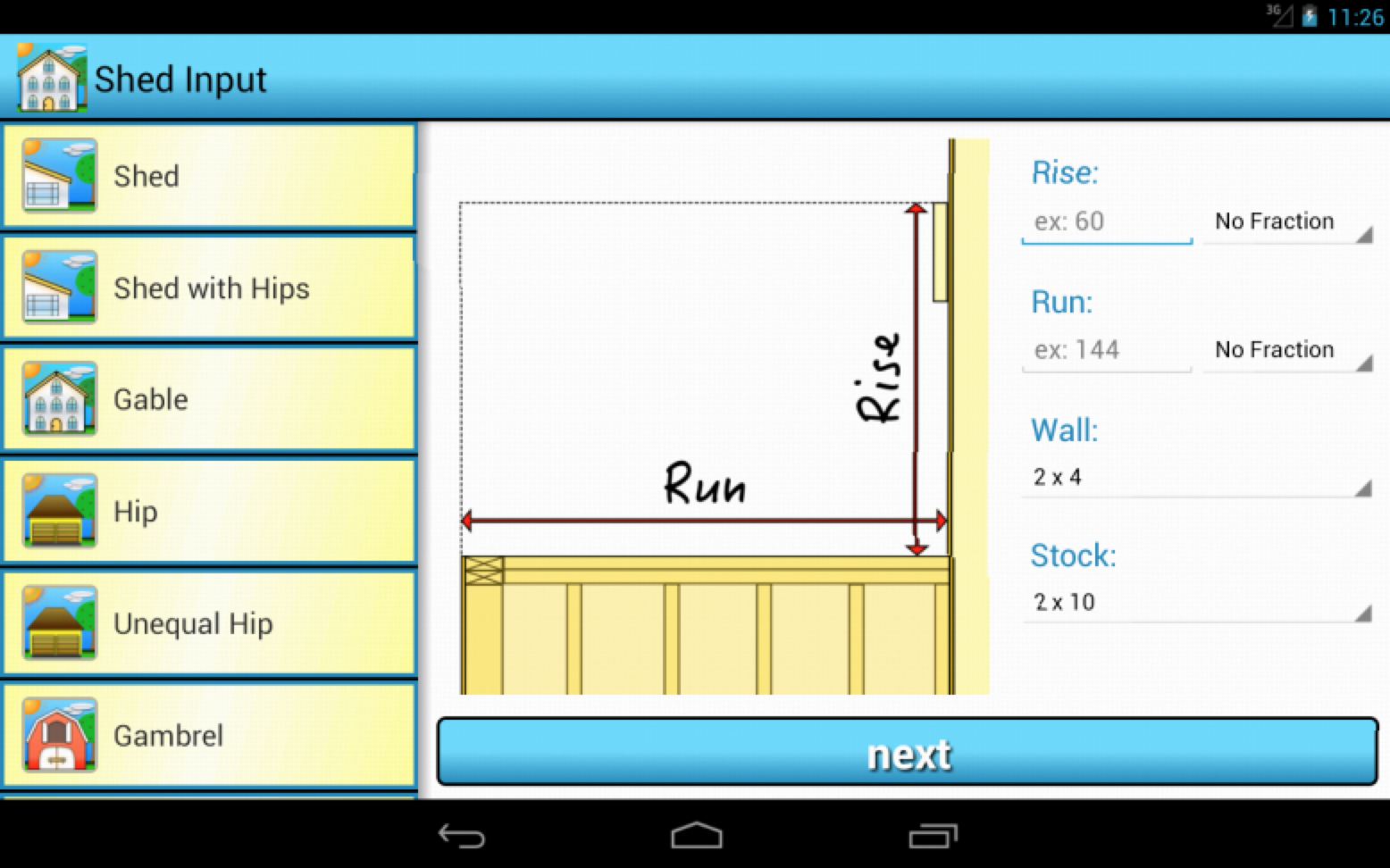
I spent this week tidying up a few odds and ends in my rafter creation app as well as drawing diagrams and creating icons.  I have done a bit of coding, as well as correcting a bug I discovered with gambrel and mansard fascia calculations.  There will be more coding needed before I can publish still, but not too much, the rafter instructions are not yet housed independently in their respective classes.  That – and I still need to build in an options menu with an ‘about’ page and an option to quit the application.  I have honestly been debating whether it is entirely necessary, but have been leaning towards yes.  The reason being, I don’t want the user to become frustrated with clicking the back button repeatedly when they want to quit.  There is also an issue with the fascia options regarding what to do when the user selection will not allow for a standard fascia cut.  In the event of steep pitches and short fascia projections, it can become necessary to notch the birds mouth cut of the rafter above the top plate.  When this happens you need to lace the plywood or sheathing with the portion of the rafter that is notched out.  I show this situation in the picture below.  

Image

The problem is the user may already have sheathed their building, in which case their needs to be some sort of warning to let the user know the affect of their choice.  There are a few ways I could handle this.  I could limit the user from making choices that create this situation.  The draw back here is it is not a bad practice to notch above the plate in order to accommodate the proper fascia size, and there is no reason not to apply it other than that it will require more work.  I could also choose to allow the situation to occur and just give the user a warning.  However, that would not be very helpful to the user and it would require disabling the creation instructions because they would be incorrect in such a situation.  The last and I think best scenario is to catch the situation and warn the user, giving them the option to re-enter new data or proceed.  In the event that they proceed the fascia activity will pass a message along to the output activity.  This message will let the output activity know what changes to make to the images and instruction in order to accommodate the new fascia cuts.  As a bonus to this approach, the app would be able to accommodate any fascia size in any circumstance.  The draw back would be that it will take the most time to implement and I am severely short on time.


I have completed some of my diagrams and icons this week so here are some pictures of the final product.  

Image

Image

My plan is to utilize top down views to show the necessary inputs for hips, unequal hips, mansards and sheds with hips, as my original 2D approach left to much to be assumed on the user end.  For instance you cannot show to different opposing pitches with a 2D diagram.  I will be working on those soon and will post some more pics when they are ready.  In addition to that I still need to draw all the instructional diagrams, which depict how cut up each rafter.  The textual instructions for cutting common rafters are complete but I still need to write instructions for cutting other more complex rafters.  I expect to finish all diagrams and textual instruction by the end of the week.  I will be working in order of what is most important.  Any instructional texts that don’t get done by the end of week will have to be part of the second version at this point.  That’s pretty much all thats left before I can publish so I had better get back to it.


Till next time.


Jason Hintlian

From the blog jasonhintlian » cs-wsu by jasonhintlian and used with permission of the author. All other rights reserved by the author.

TRUNK-243

After flipping through many many issues of OpenMRS’s issue tracker our group has decided to choose TRUNK-243. This issues is about going through the units test of OpenMRS and ‘cleaning up’ the tests. This bug will be great for my group and I to learn all about unit tests. My book I also chose to read this semester focuses on unit testing specifically in Java.  Unfortunately last week I posted on this issue to try and save time by not needing to sift through the vast amount of classes OpenMRS CoreSW has… however I have yet to get a response. My group and I will need to manually go through the code to find all of the unit tests. This is not always a bad thing, by looking through more and more of the code we should all get a greater understanding as we mine for the unit tests. 

From the blog tbruceblog » cs401 by tbruce731 and used with permission of the author. All other rights reserved by the author.
Week (Project Status Report)

This is the second week we keep working on the ticket TRUNK-3009, then we are splitting the assignment  for each group member. Then we decided to change the ” Settings (formerly Global Properties 1.8 and below)” instead of “Global Property”, but we forgot to tell readers a number of ticket  on the wiki page , which belong to the OpenMRS website.. Unfortunately,  we could not log in on the wiki page, then we tried to reset the account but it isn’t work. we knew our account have been clocked out from  the wiki page, because a developer guy is confusing on what we are changing. Currently, we are still being locked out from the wiki page, but we still can log in on other page from the OpenMRS web site. We may un-sign the ticket 3009 and looking for another ticket to work on.

From the blog herangoc » cs@worcester by emtrieu and used with permission of the author. All other rights reserved by the author.